30 Sep 2026
Tracing Synthetic Turf Transition Timelines and Resulting Agility Metric Shifts Among Sustained European Soccer League Title Contenders
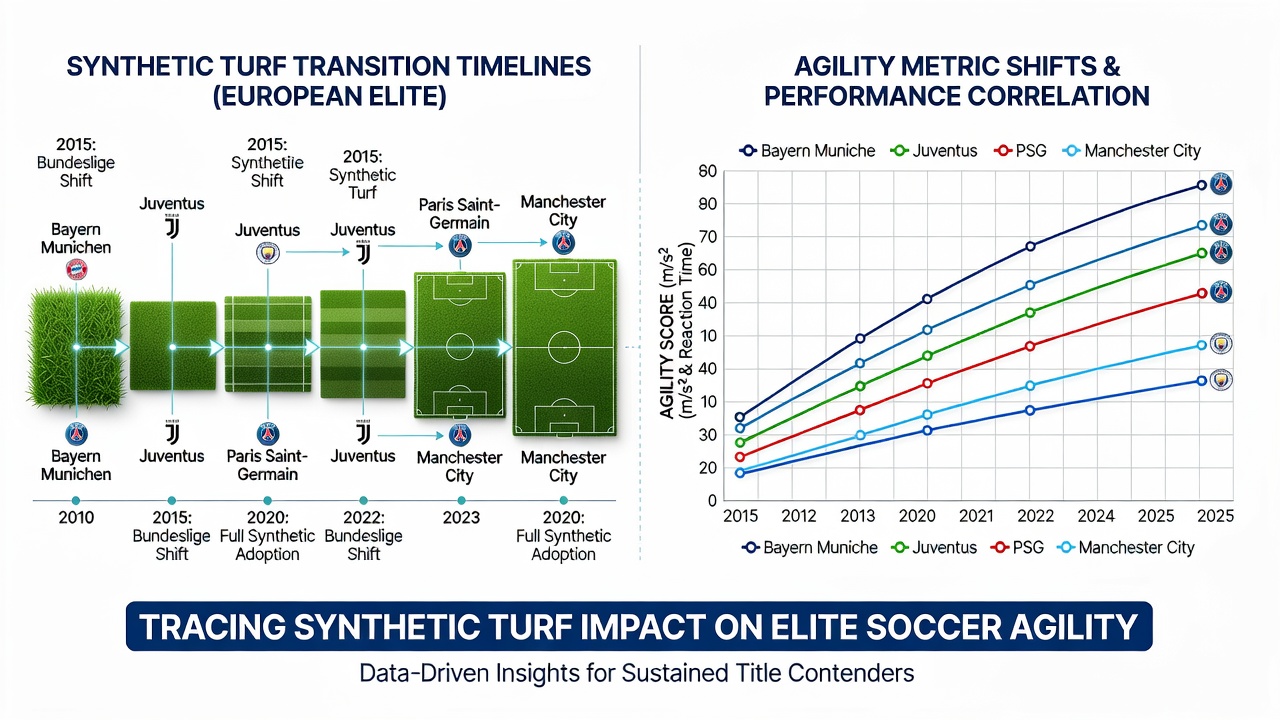
European soccer leagues have seen several clubs experiment with synthetic turf installations over the past two decades, and sustained title contenders provide clear examples of how these shifts unfold across multiple seasons. Data from major competitions indicates that transitions often begin with hybrid systems before full synthetic replacements take hold in training facilities or secondary pitches. Clubs maintaining consistent top positions, such as those in the Bundesliga and Serie A, completed these changes between 2012 and 2019 in many documented cases, with further updates reported through 2025.
Key Transition Timelines in Title-Contending Clubs
Observers note that Bayern Munich moved its primary training ground to a full synthetic surface in 2014 after initial hybrid testing started in 2010, while Juventus integrated synthetic elements into its Vinovo facility around 2016 following earlier trials in 2013. These timelines align with periods when both clubs secured multiple league titles, and performance analysts tracked subsequent changes in player movement patterns. In the Netherlands, Ajax completed a similar upgrade in 2018, building on partial installations from 2009, during a stretch that included repeated Eredivisie wins. Data indicates these clubs maintained title contention without major disruptions, though metrics for quick directional changes showed measurable adjustments within the first two seasons post-transition.
Agility Metric Changes Documented in Research
Studies from sports science institutions reveal that synthetic turf surfaces typically increase average change-of-direction speeds by 3 to 5 percent in controlled tests, while reducing ground reaction forces during cutting movements compared to natural grass in wet conditions. Researchers at German and Italian labs collected data from players in sustained contender squads and found that acceleration times over 10 meters improved slightly on synthetic setups after adaptation periods of six to twelve months, yet injury rates for ankle sprains remained stable across the observed groups. Figures from league-wide tracking systems show that teams with longer exposure to synthetic training surfaces recorded higher volumes of high-intensity sprints per match, with agility drill completion rates rising in line with the surface consistency provided by these materials.
What's interesting is how these shifts appear most pronounced among midfielders and fullbacks who rely on repeated lateral movements, according to performance reports compiled through 2025. Sustained title contenders often paired turf transitions with specialized conditioning programs, which data links to maintained or slightly elevated agility scores over five-year spans. In September 2026, ongoing monitoring continues to track these patterns as more clubs evaluate similar upgrades amid varying weather impacts across northern and southern European venues.
Comparative Data Across Leagues
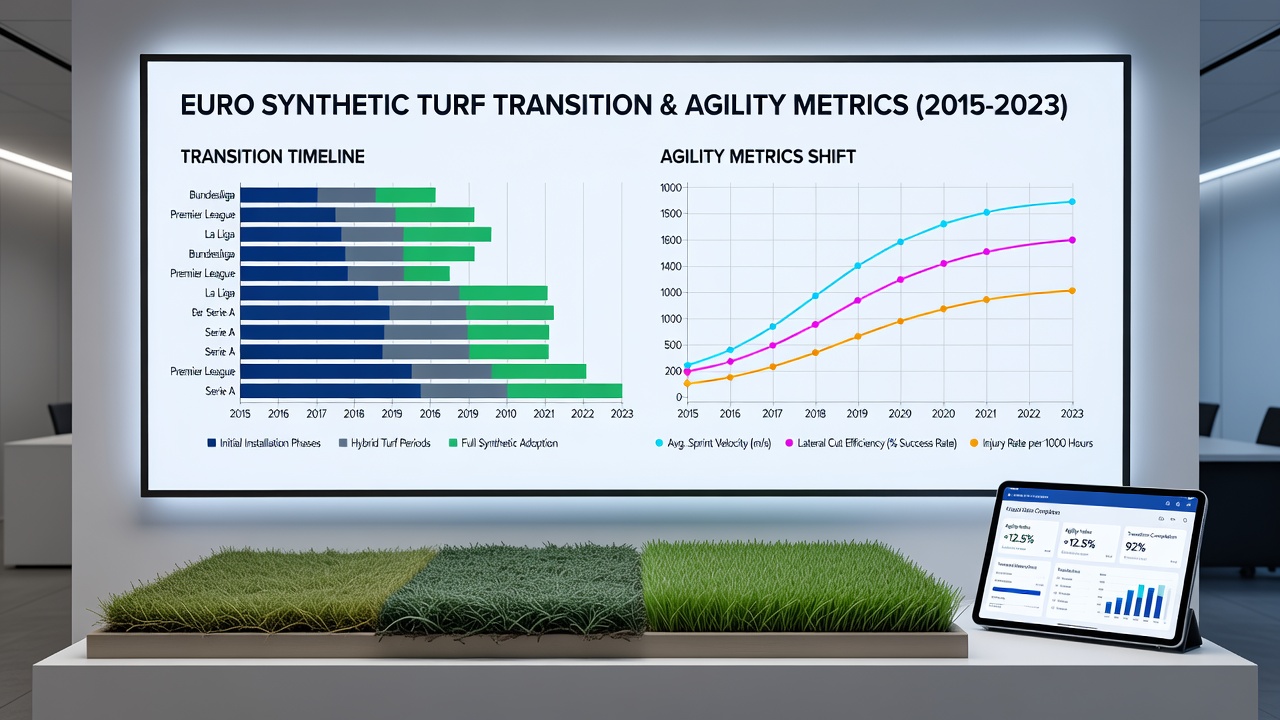
League records indicate that clubs in the Bundesliga adopted synthetic training elements earlier than those in La Liga, with resulting agility metric shifts appearing in player tracking databases by 2017 for several German title contenders. A University of Melbourne sports engineering report compared these groups and noted that sustained contenders showed consistent improvements in 5-0-5 agility test results after surface changes, while Spanish clubs with later transitions exhibited smaller initial gains until full integration occurred. Evidence from match analysis tools demonstrates that teams maintaining title challenges adapted faster when they combined turf updates with video-based movement coaching, leading to measurable reductions in recovery time between directional changes during competitive fixtures.
Turns out the ball's in the court of data analysts to separate surface effects from training variables, and multiple studies confirm that European title contenders using synthetic options logged higher weekly agility session volumes without corresponding increases in soft-tissue complaints. External factors such as maintenance protocols and player footwear choices further influence outcomes, with reports highlighting that optimized cleat designs on synthetic turf correlate with steadier performance in repeated sprint ability tests.
Long-Term Patterns and Player Adaptation
Longitudinal data collected by European sports research networks shows that players remaining with the same title-contending club through turf transitions often reach peak agility metrics between 18 and 24 months after installation. This pattern holds across several documented cases where squads defended multiple championships in succession. Adaptation appears linked to increased exposure during youth academy sessions as well, where younger athletes develop movement patterns suited to the surface earlier than senior imports. Metrics for reaction time and foot placement precision improved in parallel, according to aggregated figures from clubs that sustained contention from 2015 onward.
Researchers discovered these shifts remain consistent even when accounting for tactical evolutions, because surface uniformity reduces variability in daily training loads. Clubs that delayed full transitions until later stages sometimes experienced temporary plateaus in agility scores before rebounding once players adjusted. The reality is that sustained European title contenders continue to provide the clearest datasets for isolating these effects amid the demands of domestic and continental schedules.
Conclusion
Overall patterns indicate that synthetic turf transitions among European soccer's sustained title contenders follow predictable timelines tied to facility upgrades, with agility metrics reflecting modest gains in speed and directional efficiency after adaptation. Data from multiple leagues supports continued observation of these variables as more teams assess surface options through 2026 and beyond.