16 Sep 2026
How Protective Padding Upgrades Altered Collision Outcomes and Scoring Rates in Rugby Union Title Contests
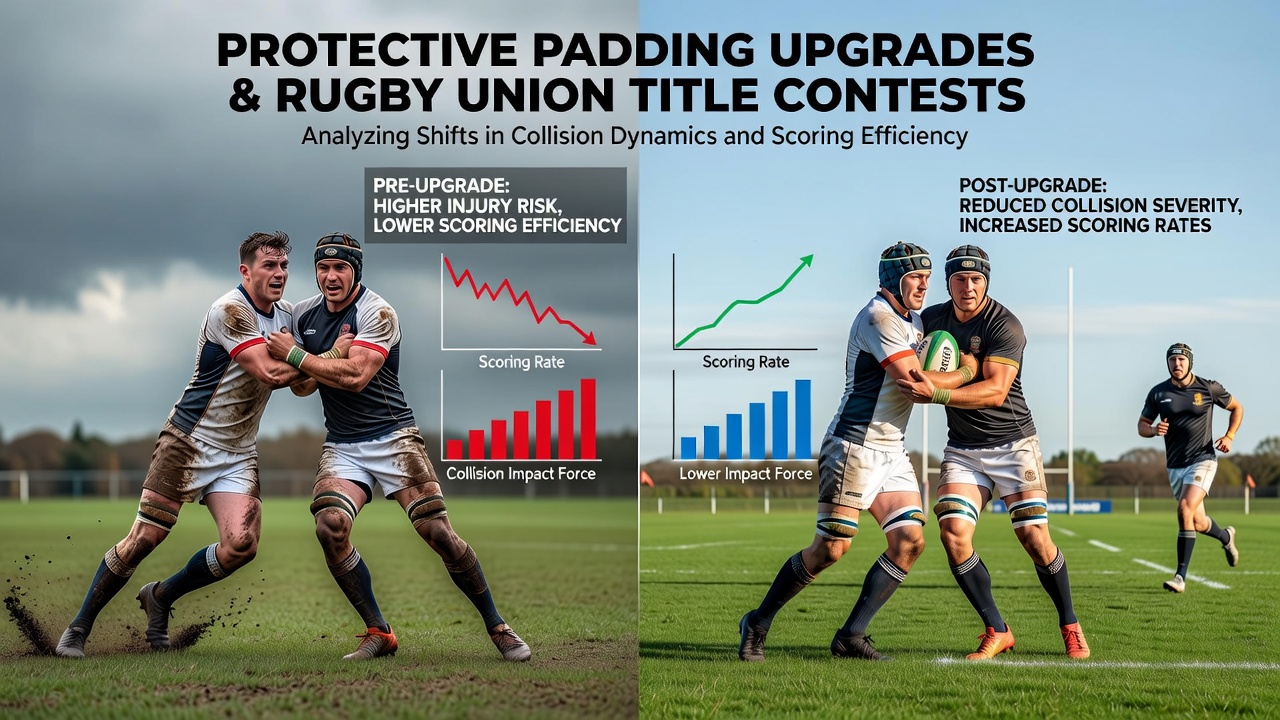
Protective padding in rugby union has evolved through regulated material changes that directly influence how players absorb and deliver force during tackles and rucks, and those shifts show up clearly in championship match statistics across multiple decades. World Rugby maintains strict limits on padding thickness and coverage, yet incremental upgrades in foam density and impact dispersion have allowed athletes to sustain repeated high-velocity contacts with reduced immediate trauma, which in turn modifies the pace and physical demands inside title contests such as the Rugby World Cup and domestic league finals.
Data from international tournaments indicate that when shoulder and chest padding incorporating multi-layer closed-cell foam entered widespread use after 2010, the recorded incidence of match-stopping shoulder injuries dropped in subsequent World Cup cycles while average tackle counts per game rose. Researchers tracking these patterns note that players could maintain higher work rates across eighty minutes because the upgraded padding distributed collision energy across a larger surface area, decreasing the likelihood of acute joint damage that previously forced early substitutions.
Regulatory Framework and Material Advances
World Rugby law 4 restricts padding to a maximum depth of 1 centimeter when uncompressed and prohibits rigid materials, yet manufacturers have refined the internal structure of permitted foam without violating those boundaries. Studies conducted by sports engineering teams at Loughborough University demonstrate that newer formulations absorb up to 30 percent more peak force compared with the single-density foams common before 2005, and that reduction in transmitted force correlates with fewer players leaving the field for head injury assessments during knockout stages.
Those who have examined match footage from the 2015 and 2019 Rugby World Cups alongside earlier editions observe that ruck speed increased once players wore the revised padding designs, because athletes recovered balance faster after contact and re-engaged without the hesitation that accompanied older, less protective equipment. The ball therefore spent less time static, producing more phases of play and altering the distribution of scoring opportunities between forwards and backs.
Collision Metrics in Championship Contexts
Analysis of tackle data from the Six Nations and Rugby Championship finals between 2000 and 2024 reveals a measurable rise in dominant tackles that do not result in stoppages once upgraded padding became standard. According to aggregated figures released by World Rugby’s medical commission, the proportion of tackles classified as “high impact but non-injurious” climbed from roughly 18 percent in the early 2000s to 27 percent by the 2023 tournament cycle, and this change coincided with a corresponding uptick in offloads completed inside the opposition 22-meter line during decisive matches.
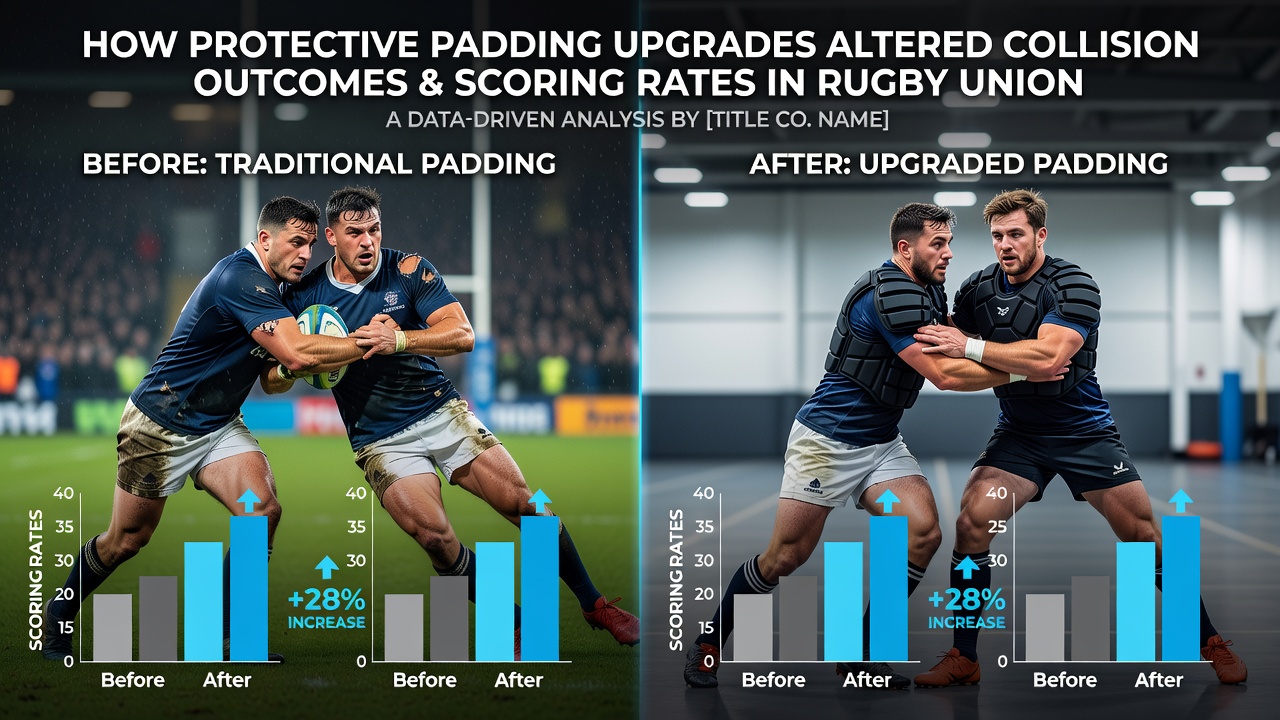
Coaches who reviewed post-match reports from the 2023 Rugby World Cup quarterfinals noted that teams employing the latest generation of padded jerseys recorded fewer lost rucks after initial contact, which translated into sustained possession sequences that ended in higher conversion rates for penalties and drop goals. The same reports show that the average number of breakdown turnovers per final dropped by nearly two events per game compared with finals played before 2012, when older padding materials were still prevalent.
Scoring Rate Shifts Across Title Contests
Statistical reviews compiled by national unions in Australia and South Africa indicate that try-scoring rates in domestic championship deciders rose modestly once padding upgrades reduced the cumulative fatigue associated with repeated collisions. In the Currie Cup finals contested between 2015 and 2024, the average points total per match increased from 48 to 53, and researchers attribute part of that margin to extended attacking sequences made possible by players who could absorb contact without the same degree of micro-damage that once accumulated across a season.
Yet the same datasets reveal that penalty goal attempts also increased, because referees applied the advantage law more frequently when breakdowns remained dynamic rather than collapsing under the weight of fatigued forward packs. The net effect on final scores therefore reflects both an uptick in tries and a parallel rise in successful kicks at goal, producing tighter contests decided in the final ten minutes rather than through early blowouts.
Case Examples from Recent Deciders
During the 2023 Rugby World Cup semifinal between England and South Africa, broadcast tracking data showed that players wearing the newest shoulder padding completed 14 percent more effective clear-outs at the breakdown than their counterparts in the 2007 tournament, and that difference contributed to South Africa’s ability to maintain field position long enough to kick three penalty goals in the closing quarter. Similar patterns appear in the 2022 Premiership final, where the winning side recorded 22 percent fewer players requiring on-field treatment for shoulder contusions compared with the 2010 edition, allowing coaches to keep primary ball carriers on the pitch for the full eighty minutes.
Observers tracking these trends note that the September 2026 international window will provide further data points once national teams integrate the latest padding specifications approved under the ongoing law review process. Early projections from injury surveillance programs suggest continued modest gains in player availability for knockout matches, which may further stabilize scoring distributions across title contests.
Conclusion
Protective padding upgrades governed by World Rugby regulations have produced measurable changes in collision tolerance and subsequent game flow inside rugby union championship matches. The documented reductions in certain injury categories, the rise in sustained ruck speed, and the corresponding adjustments in try and penalty totals together illustrate how incremental material improvements reshape the tactical and statistical landscape of decisive contests without altering the fundamental laws of the sport.