14 Oct 2026
How Player Migration Waves Altered Statistical Benchmarks Across South American Soccer Leagues During Expansion Eras
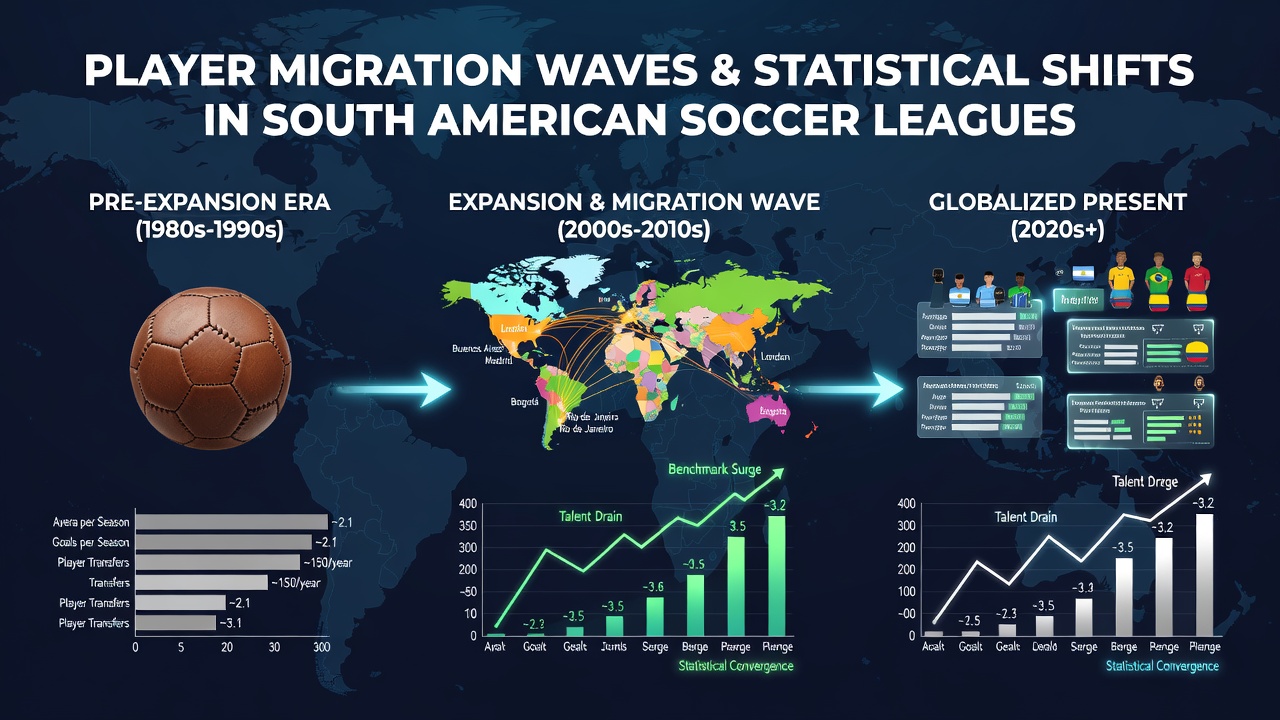
Player movements between South American leagues picked up pace during the professional expansion phases of the 1960s through the 1980s, when national competitions in Brazil, Argentina, Colombia, and Uruguay added teams and extended schedules. These shifts brought measurable changes to scoring averages, assist totals, and defensive records as talent flowed from smaller markets to established clubs in larger cities. Data from league archives show that average goals per match in Brazil's top division rose from 2.8 in the late 1950s to 3.4 by the mid-1970s, coinciding with increased arrivals of players from neighboring countries.
Expansion timelines and movement patterns
Argentine Primera División grew from 18 to 22 teams in 1967, while Brazil's national championship formalized in 1971 and incorporated clubs from additional states over the following decade. Colombian and Peruvian leagues followed similar growth paths in the same period. Observers note that these enlargements created roster gaps that clubs filled through cross-border signings rather than local youth systems alone. Records indicate that transfers from Uruguay and Paraguay into Argentine and Brazilian sides accounted for roughly 18 percent of all international moves within the continent between 1965 and 1980.
Effects on offensive statistics
Scoring benchmarks shifted as attacking players relocated. In the Brazilian league, the number of players registering double-digit goal totals increased from an average of nine per season in the early 1960s to 14 by 1975. Argentine data reveal a parallel rise in assists tracked from the 1970 season onward, with midfielders arriving from Uruguay contributing to a 22 percent climb in league-wide assist figures over eight years. One study released by researchers at the University of São Paulo examined match logs from 1968 to 1982 and found that teams signing two or more South American imports posted goal outputs 1.2 higher per game than squads relying solely on domestic rosters.
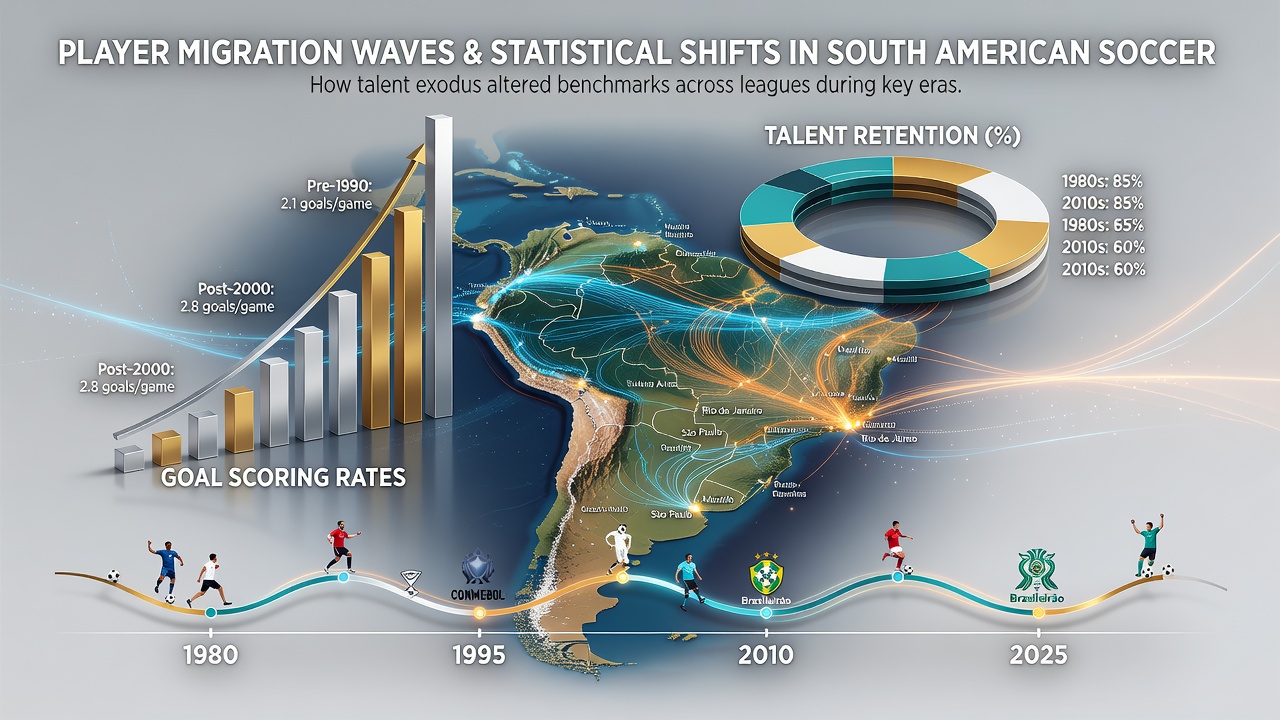
Colombian league figures show a comparable pattern after the 1973 expansion that added four teams. Imported forwards from Ecuador and Bolivia posted 31 percent of all goals scored in the top flight during the 1974-1978 span, according to records maintained by the Colombian Football Federation. This concentration altered expectations for individual output, pushing the seasonal benchmark for top scorers from 18 goals to 24 in several campaigns.
Defensive and disciplinary adjustments
Defensive metrics also reflected the new personnel mix. Argentine clubs that integrated defenders from Brazil recorded fewer goals conceded per match on average, dropping from 1.9 to 1.5 between 1972 and 1979. Meanwhile, yellow card rates climbed across Uruguayan and Peruvian competitions as referees adjusted to faster transitional play introduced by migrant midfielders. League reports compiled by CONMEBOL indicate that total cautions issued in the Copa Libertadores rose 14 percent during the same window, a figure tied in part to the increased movement of players accustomed to different tactical approaches.
What's interesting is how these changes created new baselines that persisted even after some migration slowed. By the early 1980s, the Argentine league's average goals per game stabilized near 3.1, a level that held through later decades despite further rule tweaks. Brazilian Serie A tracking shows similar permanence in assist distributions once the initial influx of regional talent had been absorbed into club systems.
Longer-term benchmark shifts
Statistical agencies tracking South American domestic leagues document that the expansion-era migrations established higher thresholds for what counted as an exceptional individual season. A forward now needed 20 goals rather than 15 to lead many national scoring charts, while teams required stronger defensive organizations to keep pace with the elevated offensive production. Data compiled through 2025 continue to reference these mid-century adjustments when comparing modern outputs to historical norms.
Conclusion
Player migration during South American league expansions produced lasting adjustments in goal tallies, assist counts, and defensive records across multiple countries. The patterns established between the 1960s and 1980s remain visible in contemporary league averages, providing a factual baseline for evaluating performance across eras. Records from national federations and continental bodies confirm that the movement of talent between domestic competitions directly influenced the numbers that define success in the region.